DRINK A GREEN
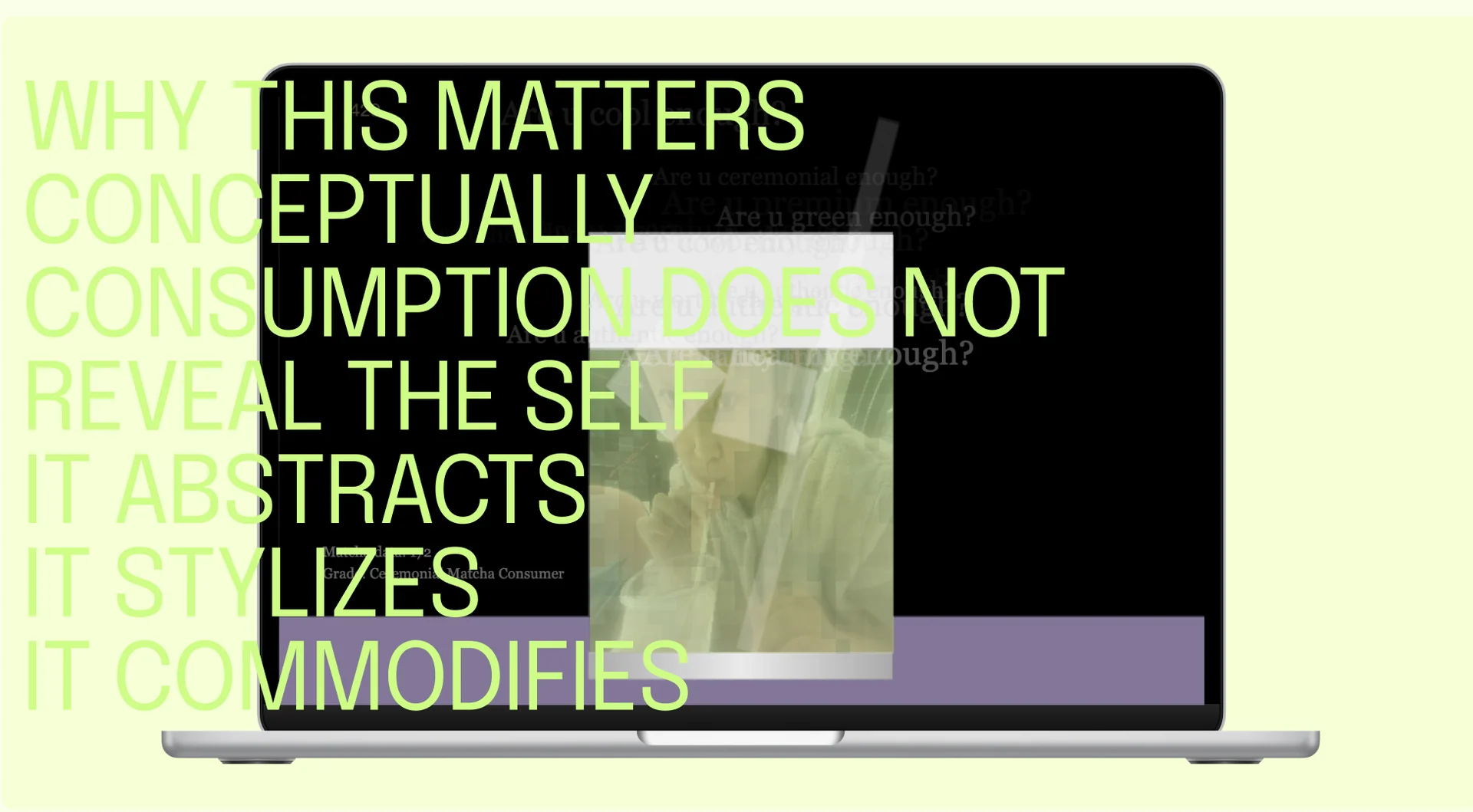
An interactive installation that uses a cup of matcha to explore how visual culture, social media and hierarchies of taste shape what we consume.
- Year
- 2026
- Medium
- Interactive Installation
- Tools / Materials
- p5.js, Liquid-level sensor
Project video
Project description
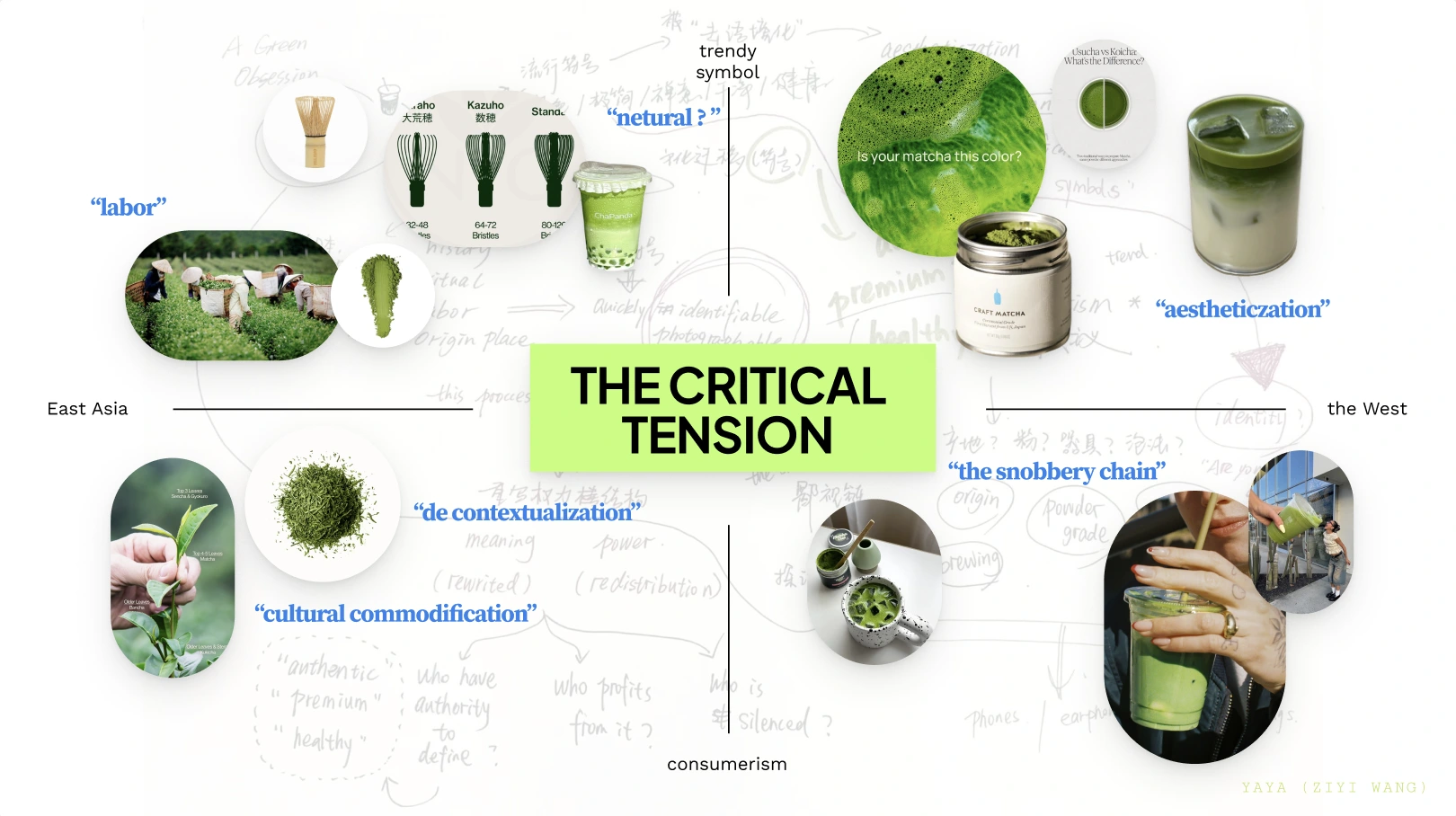
This project takes matcha as an entry point to explore how contemporary consumption is shaped by visual culture, social media, and subtle hierarchies of taste. No longer just a drink, matcha has become a circulating image—clean, aesthetic, and desirable—embedded within a larger system of cultural signaling. Beneath its soft and calming surface lies a more complex structure: what can be described as a “snobbery chain.”
Within this chain, individuals continuously position themselves through consumption. Choices around food, aesthetics, and lifestyle become markers of identity, creating a loop of imitation, aspiration, and differentiation. Matcha, in this context, functions as both object and symbol—associated with refinement, purity, and a certain cultural awareness—while quietly reinforcing layers of distinction.
The work translates this abstract structure into a bodily, interactive experience. Participants are invited to drink a real cup of matcha latte through a straw. As the liquid level decreases, a sensor captures the change and transmits the data to a p5.js system. On screen, the visual environment responds in real time: green liquid forms dissolve, and fragments of text emerge from the surface, as if the act of consumption is uncovering something hidden beneath.
Drinking, here, becomes more than a passive act—it is transformed into a trigger. Each sip activates the system, linking physical behavior with visual consequence. The participant does not simply observe the work, but becomes entangled within it, unknowingly performing and sustaining the very chain the project reflects on. Consumption is no longer invisible; it is measured, visualized, and subtly questioned.
Aesthetically, the project maintains a gentle and inviting atmosphere: muted greens, soft gradients, and fluid motion evoke the familiar comfort associated with matcha culture. Yet this visual softness contrasts with the emerging textual elements, which introduce moments of hesitation and reflection. The work exists in the tension between attraction and critique, where pleasure and awareness coexist.
Rather than offering a definitive answer, the project poses an open question: when we consume something like matcha, what are we really consuming? Taste, image, identity—or a position within an ongoing chain of cultural desire?
Project PDF
Related project